Updated · View the original (2022)
5 Tips for Taking Quality Real Estate Photos
A buyer decides whether to open your listing in about a second, and that decision rides on one photograph: the thumbnail in the search results. Nearly every home search now starts online, so that single frame is doing the work a great curb-appeal moment used to do. If it does not stop the scroll, the price, the square footage, and everything else you wrote never get read.
Getting this right pays. Redfin found that homes between $200,000 and $1 million shot with a professional camera sold for $3,400 to $11,200 more relative to their list price than comparable homes shot with amateur photos. You do not need a full studio to move in that direction. If you are an agent or a seller planning to snap a few shots yourself before the pro arrives, these five habits do most of the heavy lifting. They are about preparation and judgment, not gear.
1. Give the shoot enough time, and good light
The most common mistake is treating photos as a ten-minute errand on the way out the door. Framing a room well takes time, and you rarely know what a house needs until you walk it. Something will need straightening, a bulb will be out, or the light will be wrong. Block off an hour so you are never rushing the frames a buyer judges the whole home by.
Light is the biggest variable you control by simply waiting. Open every curtain and blind, turn on every lamp, and shoot interiors when the rooms are naturally bright and even. For the exterior, aim for a time when the sun is behind or beside the house rather than glaring into the lens, and skip a flat, gray sky if you can wait out the weather. Keep the season honest too: a green summer yard on a listing that is now bare quietly tells buyers the photos are stale.
2. Stage each room so buyers can picture the life in it
An empty or cluttered room tells a buyer what is physically there. A lightly staged room tells them what living there could feel like, and that is what actually books showings. The Real Estate Staging Association reports that staged homes spend up to 73% less time on the market than non-staged listings, and photos are where that staging either pays off or vanishes.
The craft is restraint. If the sellers still live there, pull furniture off the walls so rooms breathe, angle a chair toward the window, set the dining table, and add a bowl of fresh fruit or flowers. New pillows or a rug are a cheap, fast lift. For a vacant home, a stager earns their fee quickly, and when furniture is not an option, honestly disclosed virtual staging can furnish empty rooms convincingly. Buyers add furniture in their imagination easily; they cannot mentally subtract someone else's clutter.
3. Declutter, clean, and sweat the small details
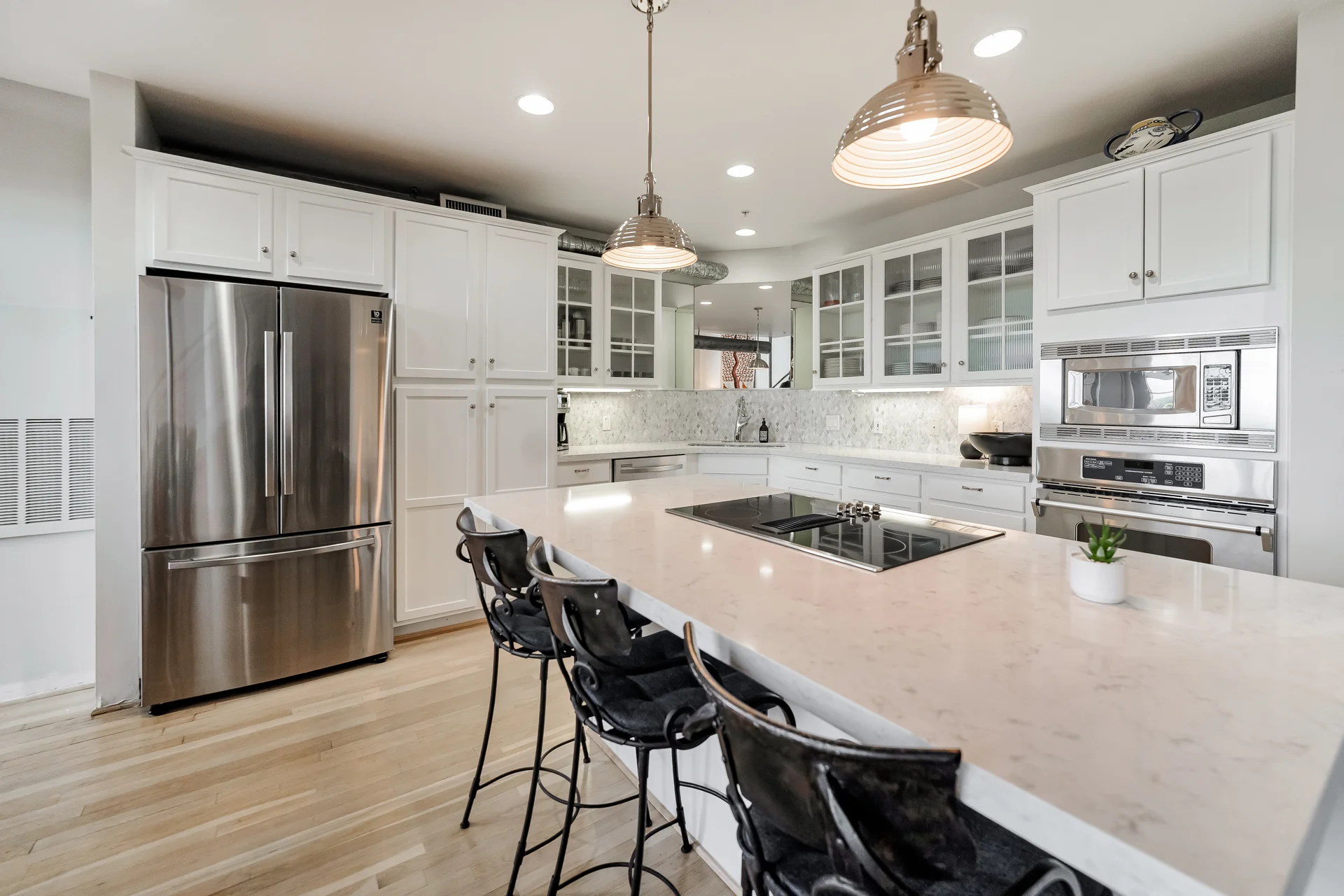
The camera sees everything your eye politely ignores. Clear countertops to nearly empty, put toiletries and small appliances away, and take down the photo collages and refrigerator magnets. A room that feels a little bare in person almost always looks calm and spacious in a photo, which is the only place it needs to win.
Then slow down for the details that mark careless work: close every toilet lid, straighten crooked bedspreads and lampshades, line up the blinds so the slats match, and hide cords and trash cans. Clean the windows inside and out if they show in frame. None of this is glamorous, and all of it is the difference between a listing that looks cared for and one that looks like an afterthought. Buyers read the second as a signal about the house itself.
4. Clear out pets and anything personal
Move pets and their evidence out of the frame before you start: beds, bowls, crates, and litter boxes included. Owners love their animals, but plenty of buyers see a dog or cat and immediately think allergies and odors, and there is no reason to hand them that thought.
The same sweep protects your seller. Listing photos are public, permanent, and copied across every portal within hours, so take two minutes to put away anything a stranger should not study at leisure: mail and documents with an address, prescriptions, a home safe, displayed valuables, and family photos or children's names on a wall. Good photography markets the property without advertising the owner's private life.
5. Add a walkthrough, not just stills
Even a clean set of photos is no longer a complete listing. Today's buyers, and across Texas that includes a steady stream of relocation and out-of-state shoppers, want to explore a home before they drive to it. Video has become a primary way people tour interiors: Google and NAR found that 70% of home shoppers use video to tour the inside of a home.
If you shoot a walkthrough, do it in the same visit as the stills so the light matches and the two feel like one listing. A phone on a steady gimbal covers the basics, but the pieces that consistently lift a listing, a smooth video tour and a 3D walkthrough that lets a buyer move through the home on their own, are worth handing to someone who does them every week.
When the listing has to compete
These five habits will make almost any home look better online, and for a modest listing or a quick refresh they may be all you need. But when a property has to stand out in a crowded market, the gap between a careful amateur set and a professional shoot is exactly the gap Redfin measured, and it usually exceeds the cost of the shoot. A pro brings the lighting technique that makes windows read blue and rooms read bright at once, the consistency to hold that standard across every room, and the judgment to show a home honestly at its best.
That is the reliable path for a listing you need to win. See how we shoot Texas real estate and the standard we hold across every market we cover.