Updated · View the original (2022)
Sell Your Dallas Home Faster With Professional Real Estate Photography
Days on market is the number every seller watches and most misunderstand. A home does not sit because it is overpriced by some fixed amount or because the market is slow. It sits because it fails to convert attention into showings in the narrow window when it has the most attention to convert. That window is the first week a listing goes live, and the single biggest lever you control over it is the photography. Strong images do not just make a home look good. They compress the time it takes to sell it.
The financial case is settled. Redfin found that homes between $200,000 and $1 million photographed with a professional camera sold for $3,400 to $11,200 more relative to their list price than comparable homes shot with amateur photos. On a Dallas listing, that gap is many times the cost of the shoot. The faster-sale case runs on the same engine, and this article is about how that engine actually works: why professional media pulls a sale forward in time, what it changes in the buyer's decision, and how a listing in the Dallas market should be built to use it.
How photography actually compresses time on market
A home does not sell to the whole market. It sells to the handful of qualified buyers who see it, feel something, and book a showing before the next listing distracts them. Everything between "listed" and "under contract" is a series of small conversions, and photography sits at the top of every one of them.
It starts with the portals. When a listing goes live, it surfaces to the largest audience it will ever have: saved-search alerts fire, it lands high in the results grid, and it carries the "new" flag that buyers actively hunt for. That freshness is a depreciating asset. If the lead photo does not stop the scroll during those first days, the listing quietly drops down the grid as newer inventory arrives, and no amount of price adjustment fully buys back that lost first-week momentum. Professional imagery is how you spend the freshness window instead of wasting it.
The next conversion is the click. Buyers scan a wall of thumbnails and open a fraction of them. A clean, luminous lead image earns the click; a dim, crooked phone shot gets skipped, and a skipped listing generates no showing no matter how good the house is behind the door. Then comes the gallery, where the job shifts from earning the click to earning the visit. This is where thin, muddy, or distorted photos quietly kill momentum: the buyer cannot picture the space, cannot picture their life in it, and moves on.
The result of winning those conversions is not just more showings. It is more qualified showings, from buyers who already understand the layout and have decided the home is worth their Saturday. Those buyers arrive closer to a decision, which is why well-photographed homes tend to attract earlier and stronger offers and lean less on the price cut that is the classic symptom of a listing that failed its first week. Fewer price reductions is itself a speed story: every reduction resets the clock and signals weakness to the very buyers you want competing.
The first frame is the whole ballgame
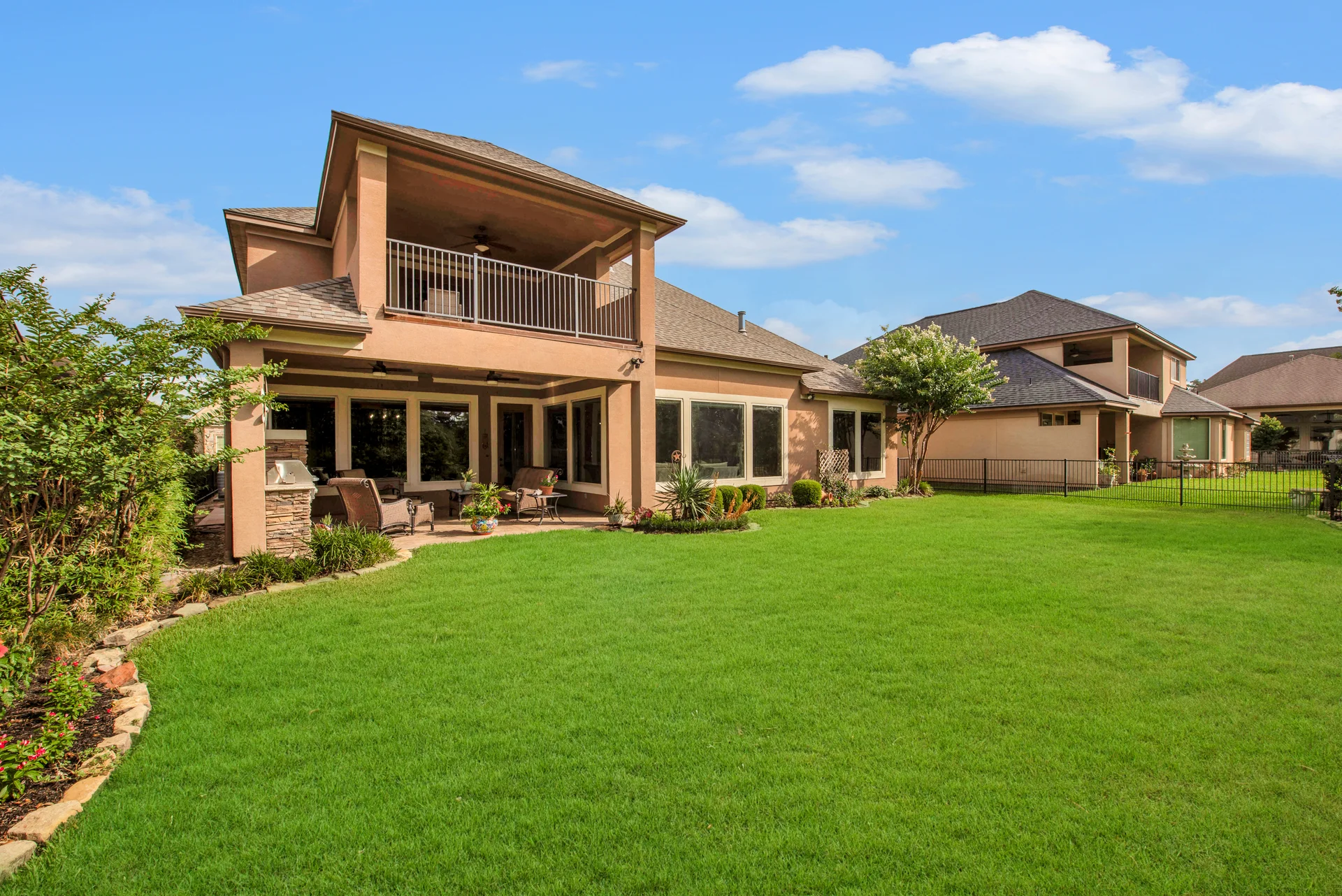
If you change only one thing, change the lead photo. It is the image that drives the click from the search grid, so it has to be the single most compelling frame you have, not the first one the camera happened to take. For most Dallas homes that means a clean, well-lit exterior with a blue sky and a straight roofline. For a property that shows well at dusk, a twilight shot with warm windows against a deep sky is one of the highest-performing hero images in real estate, because it reads as premium in a grid full of flat midday snapshots.
What you must never lead with is a dark entryway, a cluttered kitchen, or a bathroom. Those frames answer questions the buyer has not asked yet and spend your best chance before they ever open the listing. Order matters too: after the hero, take the buyer through the home the way they would walk it, so the gallery tells a story instead of presenting a pile of rooms.
What professional actually changes in the photos
The gap between a snapshot and a photograph that sells is not the camera body. It is control of light, and it shows up in three places buyers feel even when they cannot name them.
Exposure. Interiors are one of the hardest subjects in photography because the eye sees a bright window and a well-lit room at once, and a camera cannot. Point a phone at a Dallas living room and you get one of two failures: a glowing white rectangle where the window should be, or a correctly exposed window over a room gone dark. Professionals blend several bracketed exposures or add flash to lift the room until it balances the light through the glass. Done right, the Texas sky reads blue through the window and the room reads warm and open. That balance is the clearest single tell of professional work.
Color. A room lit by warm bulbs, cool daylight, and a green-tinted fixture over the sink looks fine to your eye, which adjusts automatically, and wrong to the camera, which records all three at once. Nothing signals amateur faster than color that feels off even when the viewer cannot say why. Correct white balance and a dominant light source bring the whole frame back to true, so the home looks the way it feels when you stand in it.
Perspective. A wide-angle lens is essential indoors, because a normal lens makes rooms look cramped. But past a certain point the lens starts to lie: walls bow, hallways stretch, and a modest bedroom balloons into something it is not. Buyers recognize the funhouse effect, and it costs you twice, first as a gimmick online and again when they walk in, feel misled, and mark the whole listing as untrustworthy. Show a room as generously as you honestly can, and no wider. Honest framing is also faster framing, because it brings the right buyers to the door instead of burning showings on people who feel tricked the moment they step inside.
Stills alone are no longer a complete listing
The most expensive mistake a seller can make today is treating photography as a stack of interior stills and stopping there. Dallas draws a steady stream of relocation and out-of-state buyers who shop, shortlist, and often decide before they ever fly in. The listings that win those buyers give them a way to explore in full before the visit, which is exactly what pulls a sale forward.
Aerial. A phone cannot show the lot, the tree cover, the pool, or how close a home sits to a greenbelt, a lake, or the highway that defines a commute. Aerial imagery answers the neighborhood question in a single frame, and it has gone mainstream: the National Association of REALTORS reports that 52% of agents now use drone photography or video. One caution: flying commercially requires an FAA Part 107 certificate, so aerial photography is one piece of the shoot that genuinely has to be handled by a licensed operator.
3D tours. For a buyer who cannot visit this week, a 3D walkthrough is the difference between a maybe and a booked showing. It lets them move through the home at their own pace, understand the flow, and rule the property in with confidence instead of guessing. The speed payoff is measured: Matterport found listings with a 3D tour sold up to 31% faster and for up to 9% more. A Matterport tour effectively keeps the home open for touring around the clock.
Video. Motion carries emotion and space in a way stills cannot, and buyers now expect it. Google and NAR found that roughly 70% of home shoppers use video to tour the inside of a home. A short, well-cut listing video also travels: it is the asset that performs on social feeds and reaches buyers who were not actively searching yet.
Floor plans. The most underused speed tool of all is the humble floor plan. It answers the one question photos cannot, how the rooms connect, and it removes a major reason buyers hesitate before booking. Zillow found that 81% of buyers are more likely to tour a home when the listing includes one. A simple floor plan alongside the gallery turns browsers into buyers who arrive already understanding the house.
Staging, real or virtual. Empty rooms tell a buyer what is physically there; staged rooms tell them what their life could feel like there, and that is what moves people to book. The Real Estate Staging Association reports that staged homes spend up to 73% less time on the market than non-staged listings. When a home is vacant, virtual staging can furnish empty rooms convincingly and cheaply, as long as it is clearly disclosed.
Selling honestly is what keeps the sale fast
Speed built on a misleading gallery is fragile, because it collapses at the showing or, worse, at the inspection. There is a bright line between finishing a photo and faking one. Correcting light, color, and verticals, or removing a stray trash can, is ordinary craft. Erasing a neighbor's roofline, digitally widening a lot, or using editing to add a fireplace or a view that does not exist crosses into misrepresentation. The direction of regulation is clear: a growing number of states now require disclosure of digitally altered listing photos, and the industry standard is moving the same way. The practical rule for a Texas seller is simple and timeless: enhance honestly, disclose alterations, and never invent a feature that is not there. Virtual staging with a clear note that rooms are digitally furnished stays firmly on the right side of that line, and a listing that matches reality is a listing that stays fast all the way to close.
Reading the Dallas buyer
Photography sells faster when it is aimed at the buyer actually shopping the area, and Dallas rewards that precision. The metro is deep and competitive, which cuts both ways: strong media stands out more here because the baseline is higher, and a weak gallery disappears faster because there is always a sharper listing one scroll away. Much of the demand is relocation and first-time buyers weighing an in-town condo against more space in a suburb, and many of them do not yet grasp how far their money goes outside the core. If a home is close to downtown but sits in a suburb, the photography should make that trade legible: show the space, the yard, and the lot advantage a comparable in-town property cannot match. If a neighborhood is defined by its schools, its walkability, or its proximity to employment centers, the imagery and the aerials should lead there. The Dallas market page shows how we frame properties across the metro, from close-in neighborhoods to the outer suburbs.
Photography is a system, not a lucky shot
Every point above shares a root cause when it goes wrong: listing media that was rushed, improvised, or handed to someone without the reps to know what portals and buyers now reward. Getting it right takes the right equipment, current knowledge of what the market and the law expect, and the judgment to show a home honestly and at its best, captured in a single visit so the look stays consistent and the listing goes live complete.
That is the whole point of hiring a professional: not prettier pictures for their own sake, but a listing engineered to convert its first week into showings and its showings into offers. If your recent galleries feel a step behind the sharpest listings in the metro, the fix is rarely the house. See how we shoot Dallas real estate, and build a listing that sells on schedule.