Updated · View the original (2020)
Selling a House With Tenants: 7 Reasons to Keep Showings to a Minimum
Selling a tenant-occupied home adds a variable that a vacant listing never has: a person who lives inside the product you are trying to sell. The tenant did not choose to put the home on the market, gains little from the sale, and now has to keep their home tidy and open their door to strangers on someone else's schedule. Handle that badly and you get a resentful occupant who leaves dishes in the sink, hovers during tours, and slow-walks access. Handle it well and you get a partner who helps you sell.
The single most powerful thing you can do to keep a tenant on your side is also the thing that protects the sale itself: keep in-person showings to a disciplined minimum. That used to force a hard trade-off, because fewer showings meant fewer chances to win a buyer. It no longer does. Buyers now screen homes online long before they ask to walk through one. According to NAR's Profile of Home Buyers and Sellers, nearly every buyer uses the internet in their search, and looking at properties online is the most common first step of the entire process. That means a listing with complete, high-quality media does the early qualifying for you, so the people who eventually knock on your tenant's door are already serious. Strong media is how you protect a tenant from disruption and still sell the house.
Here are seven reasons to run a tight showing schedule on a tenant-occupied sale, and how the right presentation makes that schedule possible.
1. The tenant is a partner in the process, not part of the property
Start by treating the tenant as a person with a stake, not a fixture that comes with the house. In practical terms that means honoring proper notice before every entry. As a general rule across Texas landlord-tenant practice, giving reasonable advance notice and agreeing on it in writing is the baseline of a respectful sale, and your listing agent should have the tenant's schedule in hand before booking anything. A tenant who works nights will not thank you for a nine a.m. Saturday tour.
Showings also go better when the tenant is out of the house. Buyers need to open closets, linger in the primary suite, and talk candidly with their agent, and none of that happens naturally with the resident trailing them. Covering a dinner out for the night of an open house is a gracious touch. It stops feeling gracious around the third or fourth request in a week. The fewer times you have to ask the tenant to disappear, the longer their goodwill lasts, which is the entire argument for leaning on media to pre-qualify buyers first.
2. Keeping a lived-in home show-ready is genuine work
A vacant listing stays staged. An occupied one has to be reset for every appointment. Real life produces dishes, laundry, mail on the counter, and a bathroom full of everyday products, and expecting a tenant to hold a home in showroom condition indefinitely is expecting a lot. This is the part of the process most likely to wear a cooperative tenant down.
Make the standard easier to hit. Paying for a recurring cleaning service and a lawn service during the listing period is a small cost against the sale price, and it signals that you understand the burden you are placing on them. It also protects your marketing, because the home has to look the way it did in the photos when a buyer arrives. Here again, the math favors fewer showings: every appointment is another full reset, so a listing that converts browsers with media rather than foot traffic asks far less of the person doing the cleaning.
3. You need the tenant on your side, and communication is how you get there
A tenant who feels informed cooperates. A tenant who feels managed digs in. From the first conversation, be transparent about the timeline, what a sale may mean for their lease, and whether the incoming owner intends to keep renting. Uncertainty is what tenants actually dread, and most of it you can resolve with a straight answer.
If the relationship already carries friction, a for-sale sign will concentrate it, and the tenant will aim that frustration at you whether or not it is fair. You cannot litigate who is right in the middle of a sale. You can keep the lines open, keep your commitments, and avoid the one thing guaranteed to sour the relationship: a relentless parade of showings. Nothing burns tenant goodwill faster than a phone that buzzes every afternoon with another access request.
4. Cooperation will be reluctant, so spend it carefully
Say and do everything right and the tenant may still only agree with reluctance. That is reasonable. You are asking someone to let strangers walk through their home while a decision that could uproot them plays out above their head. Their cooperation is a limited resource, and every unnecessary showing draws it down.
So spend it on qualified buyers only. This is exactly where listing media earns its place. A gallery of professional photographs, a 3D walkthrough, and a walkthrough video let a prospective buyer explore the entire home before they ask to see it in person. Matterport's analysis of MLS transactions found that listings with a 3D tour sold up to 31% faster and for up to 9% more, in part because an immersive tour filters out the merely curious. The buyers who book after a full virtual tour are the ones ready to write an offer, so each demand you place on your tenant does real work.
5. Share control of access, and the tenant relaxes
The showing schedule is the most important conversation you will have with the tenant, so give them real input into it. Handing over a measure of control changes how the whole arrangement feels. A tenant-managed lockbox is a good mechanism: the tenant sees who is entering and when, and agents cannot treat the home as available at any hour simply because a box is on the door. Modern electronic lockboxes notify the occupant on their phone each time someone enters, which quietly reassures a nervous tenant that access is tracked, not open-ended.
Control only matters if there is not too much to control. The fewer appointments on the calendar, the less there is to negotiate, and the less any single request feels like an imposition. A listing that lets out-of-area and relocation buyers tour by video and 3D before flying in keeps the in-person calendar short, which is precisely what makes shared control workable rather than a daily source of friction.
6. The less you ask of the tenant, the smoother it all goes
Cooperation is not a one-time favor to secure and forget. It is an ongoing account you either replenish or overdraw. One good early move is to offer the home to the tenant first, since a tenant who becomes the buyer solves the showing problem entirely. If they pass, keep them looped in on where the sale stands so nothing lands as a surprise.
Reassure them, too, about who is actually coming through: serious buyers and licensed agents, not anyone who saw a listing online. That is easier to promise when your marketing does the screening. A floor plan is one of the most efficient filters you can add, because it answers the layout questions that otherwise get answered by an in-person visit. Zillow's research found that 81% of buyers are more likely to tour a home when the listing includes a floor plan, and just as usefully, the ones for whom the layout is wrong self-select out before they ever request access. Every buyer the floor plan turns away is a showing your tenant never has to host.
7. The home still has to look outstanding
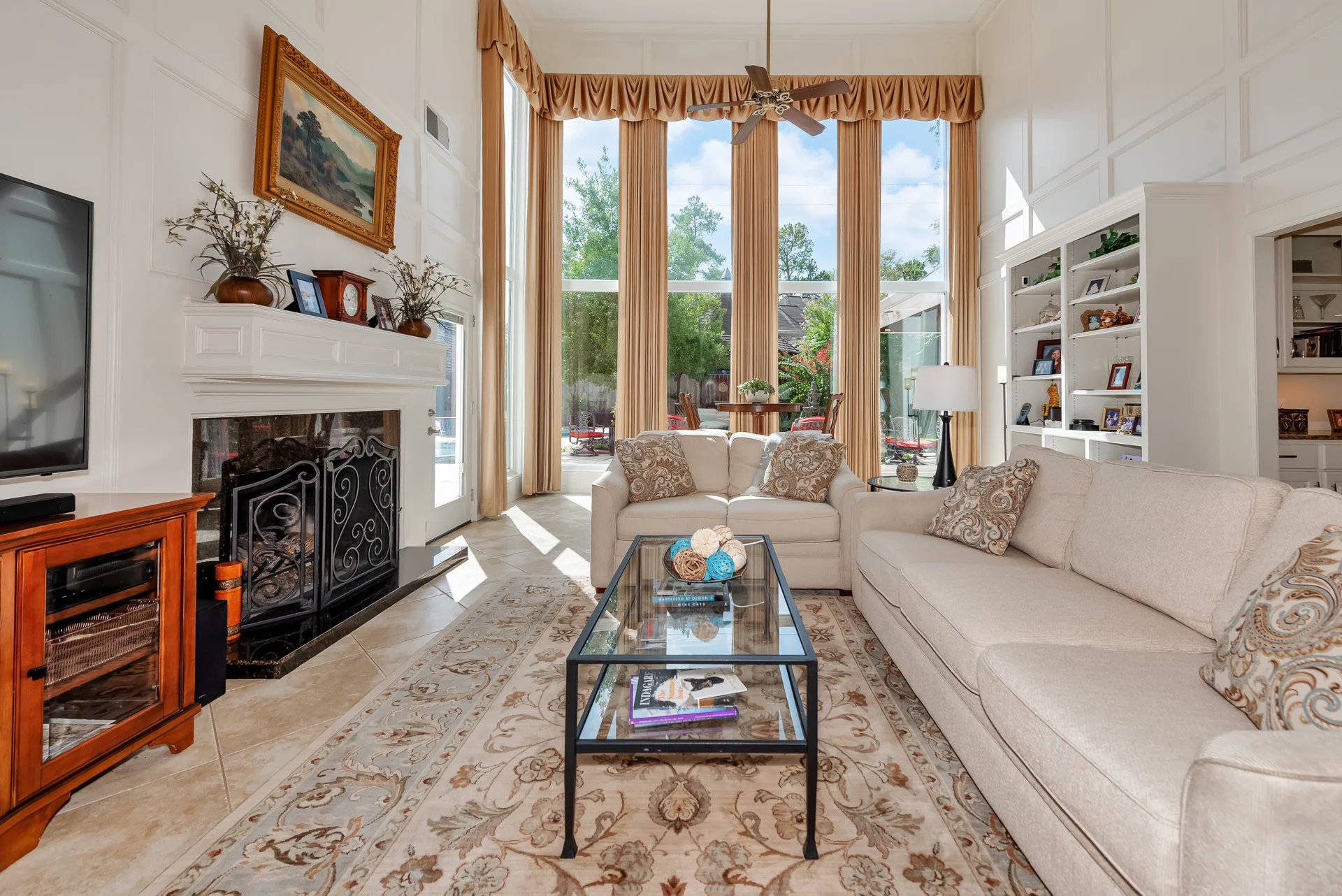
None of this lowers the bar on presentation. A tenant-occupied home has to compete with vacant, professionally prepared listings, and buyers do not grade it on a curve. You can still stage an occupied home: a stager works with the tenant's furniture or supplements it, brightens rooms, and creates the emotional pull that moves an on-the-fence buyer. The Real Estate Staging Association reports that staged homes spend up to 73% less time on the market, and a shorter listing period is itself a gift to the tenant, because it ends the disruption sooner.
Where the property genuinely is occupied and lightly furnished, honest virtual staging can show a room's potential, as long as it is clearly disclosed as digitally furnished. The goal is the same throughout: present the home so well online that a buyer arrives already convinced, which means fewer, better-qualified people walking through your tenant's living room.
Photography is how you sell an occupied home without exhausting the tenant
Put the pieces together and a clear strategy emerges. On a vacant home, showings are cheap and you can afford to run a lot of them. On a tenant-occupied home, every showing has a human cost, so the winning move is to convert as much interest as possible before anyone sets foot inside. That is exactly what professional listing media does.
The value is measurable. Redfin found that homes between $200,000 and $1 million shot with a professional camera sold for $3,400 to $11,200 more relative to list than homes with amateur photos, and video has become a primary way buyers tour interiors, with Google and NAR reporting that 70% of home shoppers use video to tour the inside of a home. A complete media package, strong stills plus a 3D tour, a video, and a floor plan, lets the vast majority of buyers pre-qualify from their phone. The handful who then request a showing are the serious ones, which is the difference between a tenant who feels respected and one who feels besieged.
Done this way, a tenant-occupied listing can sell nearly as fast and as well as a vacant one, without burning through the goodwill of the person who has to live there while it happens. See how we shoot Texas real estate, and the standard we bring to every market we cover.