Updated · View the original (2022)
10 Real Estate Photography Mistakes and How to Avoid Them
A buyer's first decision about a home is made in about the time it takes to swipe past it. Before they read the price, the school ratings, or the square footage, they react to one photograph: the thumbnail in the search results. If that image does not stop the scroll, everything else on the listing goes unseen. That is the whole reason photography carries so much weight in a sale, and it is why the mistakes below cost more than they look like they should.
The stakes are not abstract. Redfin found that homes between $200,000 and $1 million photographed with a professional camera sold for $3,400 to $11,200 more relative to their list price than comparable homes shot with amateur photos. On a Texas listing, that gap dwarfs the cost of the shoot. Yet the same avoidable errors show up in galleries across Houston, Austin, Dallas, and San Antonio every week.
This guide is written for the agents and sellers who live with the results: the people choosing how a property gets presented and, often, deciding whether to hire a professional or handle it themselves. Here are ten of the most common real estate photography mistakes, why each one quietly costs you showings and dollars, and how to keep them out of your listing.
1. Too few photos, and the wrong one leading
A thin gallery reads as a thin listing. Buyers assume that whatever is not shown is being hidden, and portals reward volume up to a point. Analyses of listing data consistently land on roughly two dozen well-chosen images as the range that performs best for a typical home, with luxury and larger properties justifying more. Going far beyond that buries your strongest shots and starts to feel padded, so the goal is coverage, not a hundred near-duplicates. Real estate photography companies that study this, such as Planomatic, land in the same place.
The bigger error is which photo leads. The first image is the one that drives the click from the search grid, so it has to be the single most compelling frame you have: a clean, well-lit exterior, or a hero twilight shot for a home that shows well at dusk. Leading with a dim entryway or a cluttered kitchen wastes your best chance before a buyer ever opens the listing.
2. Soft focus and blown-out exposure
A blurry or muddy photo signals carelessness, and buyers assume the carelessness extends to the house itself. Softness almost always traces to a hand-held camera at a slow shutter speed in a dim room. A tripod fixes it, letting the camera gather light on a slow exposure while keeping every line sharp.
Exposure is the harder half. Interiors are one of the toughest subjects in photography because the eye sees a bright window and a well-lit room at the same time, while a camera cannot. Point a phone at a living room and you get one of two failures: a glowing white rectangle where the window should be, or a correctly exposed window over a room that has gone dark and gloomy. Professionals solve this by blending several bracketed exposures, or by adding flash to lift the room until it balances the light coming through the glass. Done right, the Texas sky reads blue through the window and the room reads warm and inviting. That balance is the clearest single tell between a snapshot and a photograph that sells.
3. Selling the house instead of the life inside it
Empty, sterile rooms tell a buyer what is physically there. Thoughtfully staged rooms tell a buyer what their life could feel like there, and that is what actually moves people to book a showing. The Real Estate Staging Association reports that staged homes spend up to 73% less time on the market than non-staged listings, and photography is where that staging either pays off or disappears.
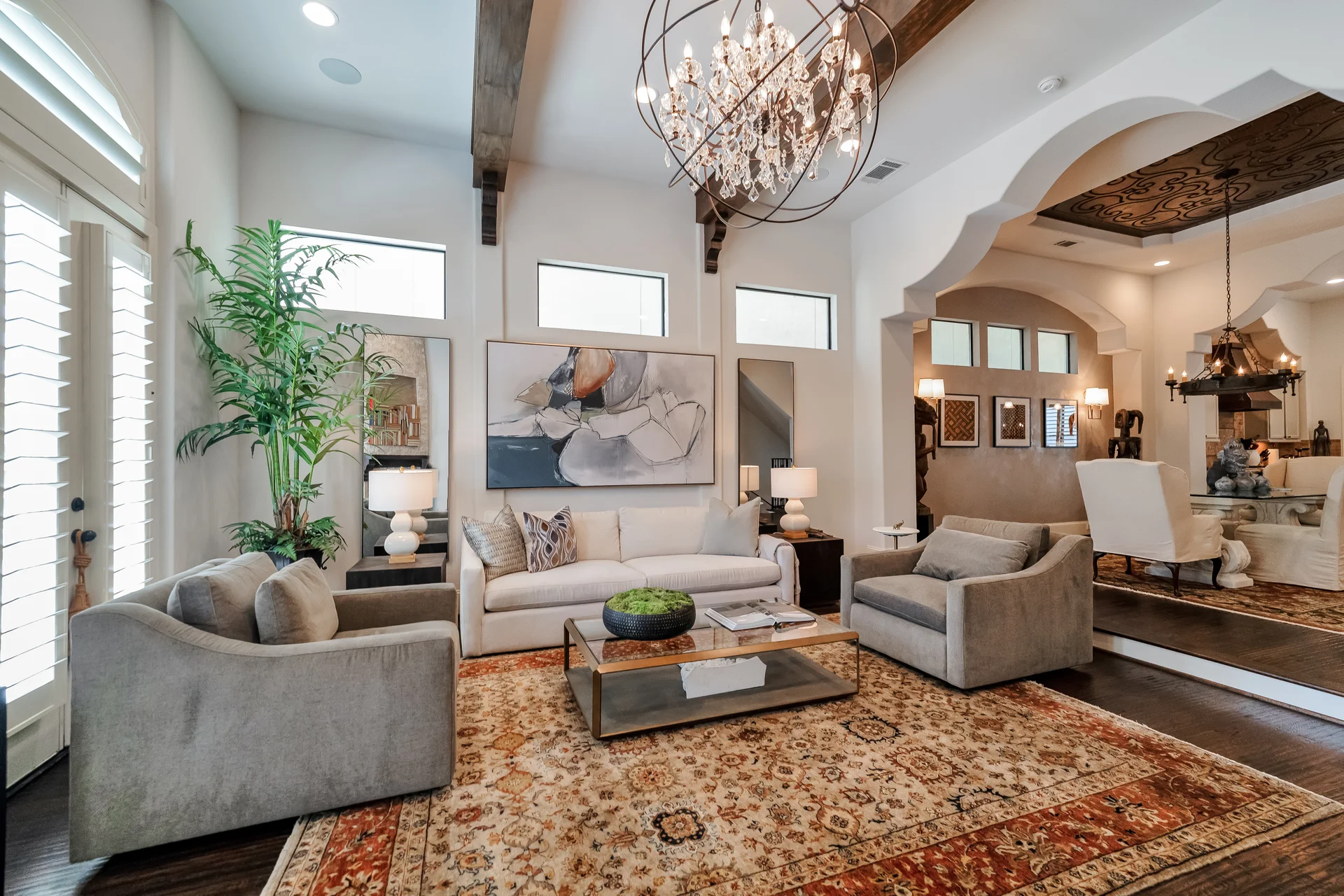
The craft is restraint. Set a dining table, angle a chair toward the window, add a bowl of fruit or fresh flowers, and let a room feel lived in without feeling occupied. Buyers add furniture in their imagination easily, but they cannot mentally subtract someone else's clutter, family photos, or oversized furniture. Before the camera comes out, the home should be cleaned, depersonalized, and pared back. When a listing is vacant, virtual staging can furnish empty rooms convincingly, as long as it is disclosed, which brings us to a mistake that has grown real legal teeth.
4. Mixed light temperatures and uncorrected color
Walk into a room lit by warm bulbs, cool daylight from the windows, and a green-tinted fixture over the sink, and your eye adjusts automatically. The camera records all three at once, and the result is a photo where the walls look orange in one corner, blue in another, and slightly sick under the kitchen light. Nothing announces amateur work faster than color that feels off, even when the viewer cannot say why.
There are two fixes, and professionals use both. At capture, adding a dominant flash source can override the mismatched ambient light so one clean color wins. In editing, correcting white balance and using local adjustments to neutralize a stubborn cast brings the whole frame back to true. The point is not to make a room look like a different room, only to make it look the way it actually feels when you stand in it.
5. Going too wide and distorting the space
A wide-angle lens is essential for interiors, because a normal lens makes rooms look cramped. But there is a line, and past it the lens starts to lie. Push into ultra-wide or fisheye territory and walls bow, hallways stretch, and a modest bedroom balloons into something it is not. It looks larger for a moment and fake for good.
Buyers have seen enough listings to recognize the funhouse effect, and it costs you twice: once when the distortion reads as a gimmick online, and again when the buyer walks in, feels misled, and mentally marks the whole listing as untrustworthy. Extreme distortion is also nearly impossible to straighten cleanly in editing. Show a room as generously as you honestly can, and no wider. The test is simple: the photo should still look like the room the buyer will stand in.
6. Dishonest or undisclosed editing
This is the mistake that has changed the most, and the one that can now end in a fine rather than a lost sale. There is a bright line between finishing a photo and faking one. Correcting light, color, and verticals, or removing a stray trash can, is ordinary craft. Erasing a neighbor's roofline, deleting power lines, digitally widening a lot, or using AI to add a fireplace, an island, or a view that does not exist crosses into misrepresentation.
Regulators have caught up. The National Association of REALTORS added a standard requiring that materially altered listing images be disclosed, and California's Assembly Bill 723, in effect since January 1, 2026, now requires agents to clearly disclose digitally altered photos, retain the original unaltered image, and mark the altered version conspicuously, with real penalties for violations. More than three dozen states now have some form of virtual-staging disclosure rule. Texas agents should treat the direction of travel as settled: enhancement is fine, alteration must be disclosed, and inventing features that are not there is never acceptable, no matter how it is labeled. Virtual staging done honestly, with a clear note that rooms are digitally furnished, stays firmly on the right side of that line.
7. Outdated and off-season photos
Snow on the roof in a July listing, or a garden in full bloom for a house that is currently bare, quietly tells buyers the photos are old and the listing has been sitting. Worse, photos that no longer match the property can themselves become a form of misrepresentation. Trees come down, a pool gets added, a room gets repainted, and the gallery has to keep up.
Keep listing photos current, and when a home sits through a season change, it is usually worth reshooting at least the exterior so the yard, light, and greenery match what a buyer will see when they pull up. Fresh imagery signals a fresh, actively managed listing.
8. All close-ups and no sense of the floor plan
A gallery full of tight shots of cabinet hardware, a thermostat, and a single faucet does not showcase quality. It signals that there was nothing better to show, and it leaves the buyer with no idea how the home actually flows. Buyers want to understand space and layout first. Lead with rooms shot from their strongest corner, and reserve close-ups for features that genuinely earn one: custom millwork, a stone fireplace, a designer fixture.
The most underused fix here is a floor plan. Zillow found that 81% of buyers are more likely to tour a home when the listing includes one, because it answers the question photos cannot: how the rooms connect. A simple floor plan alongside the gallery turns browsers into buyers who arrive already understanding the house.
9. Leaving private or security-sensitive details in the frame
Listing photos are public, permanent, and scraped by every syndication portal within hours. That makes the shoot a moment to protect the seller as well as market the home. Financial paperwork on a desk, prescription bottles, a wall calendar, visible mail with an address, a home safe, displayed valuables, and a car with a readable license plate all hand information to exactly the wrong audience. Family photos and children's names on a bedroom wall raise their own privacy concerns.
The fix is a two-minute sweep before the first shot: clear surfaces, put valuables and documents away, and remove anything you would not want a stranger studying at leisure. Good photography markets the property without advertising the owner's private life.
10. Skipping the media buyers now expect
Stills alone are no longer a complete listing, and pretending otherwise is the most common strategic mistake of all. Today's buyers, especially the relocation and out-of-state buyers so common across Texas, expect to explore before they ever visit. According to the National Association of REALTORS, 52% of agents now use drone imagery, video has become a primary way shoppers tour a home's interior, and Matterport reports that listings with a 3D tour sold up to 31% faster and for up to 9% more.
A competitive listing now pairs strong stills with aerial photography that shows the lot and neighborhood, a 3D walkthrough for buyers who cannot visit in person, and video that gives the home motion and story. One note on the drone: flying commercially requires an FAA Part 107 certificate, so this is one piece of the shoot that genuinely has to be handled by a licensed operator. Capturing all of it in a single visit keeps the look consistent and the listing complete.
The through-line: photography is a system, not a lucky shot
Every mistake on this list is preventable, and they share a root cause. Each one is what happens when listing media is rushed, improvised, or handed to someone without the reps to know better. Getting it right takes the right equipment, current knowledge of what portals and the law now require, and the judgment to show a home honestly and at its best. That is exactly what a professional brings to the shoot.
If your recent galleries feel a step behind the best listings in your market, the fix is rarely the house. See how we shoot Texas real estate, and the standard we hold across every market we cover.