Updated · View the original (2022)
8 Reasons You Need Professional Real Estate Listing Photos
Every listing in your market is competing for the same thing: the half-second it takes a buyer to decide whether to tap or keep scrolling. That decision is made on one image, the thumbnail in the search grid, long before anyone reads your price, your school ratings, or a word of your description. Photography is not the pretty finish on a listing. It is the front door, and on most listings today it is the only door a buyer opens before deciding whether the home is worth their time.
For a Texas agent, that makes the shoot one of the highest-leverage decisions in the whole transaction. Redfin found that homes between $200,000 and $1 million photographed with a professional DSLR sold for $3,400 to $11,200 more relative to their list price than comparable homes shot with amateur photos. Against a gap that size, the cost of hiring a professional is a rounding error. Here are eight concrete reasons professional listing photography earns its place in your marketing plan, and what has changed about each one heading into 2026.
1. The search grid is won on photos, not words
The modern home search starts on a screen. In NAR's 2025 Profile of Home Buyers and Sellers, looking online remained the single most common first step buyers took, ahead of contacting an agent or driving neighborhoods. That means your listing meets most of its audience as a small rectangle on Zillow, Realtor.com, or an MLS grid, sitting shoulder to shoulder with a dozen competing homes.
On that grid, the description does almost none of the work. Buyers skim past text and react to the lead image, and portal algorithms reward the listings that hold attention with more of it. A sharp, well-lit hero shot pulls the click; a dim, crooked phone photo gets scrolled past and, having earned no engagement, gets shown to fewer people. The photograph is not competing with your copy. It is deciding whether your copy is ever read.
2. You get one first impression, and it lasts
Buyers form an opinion of a home in the first moment they see it, and that opinion is stubborn. A strong opening frame primes everything that follows: the buyer scrolls the rest of the gallery already inclined to like the house, forgiving the smaller bedroom and noticing the good light. A weak opener does the reverse, and no amount of accurate square footage lower in the listing undoes it.
This is why the lead image has to be your single strongest frame, chosen deliberately rather than by upload order. For many Texas homes that is a clean, straight-on exterior in good light. For a property that shows well at dusk, a twilight shot with warm interior glow and a deep blue sky is the most reliable scroll-stopper in real estate. A professional does not just capture that frame, they know which of the day's shots deserves to lead.
3. Better photography sells the home faster
Time on market is not a neutral clock. Every week a listing lingers, buyers assume something is wrong with it, and the eventual price concession grows. Strong media compresses that clock by generating more qualified interest in the critical first days, when a fresh listing gets its biggest wave of portal exposure.
The effect compounds when you add immersive media. Matterport's analysis of MLS transactions found that listings with a 3D tour sold up to 31% faster and for up to 9% more. The mechanism is simple: a buyer who has already walked the home online arrives at the showing pre-qualified and closer to a decision, and out-of-state and relocation buyers, so common across Houston, Austin, and Dallas, can commit without a first in-person visit at all. Fewer wasted showings, faster to an offer.
4. A professional shows the home the way it actually feels
Almost anyone can take a passable photo of a kitchen on a phone. The gap between that and professional work shows up in the hardest situations, and interiors are one of the hardest subjects in all of photography. The human eye sees a bright window and a well-lit room at the same time; a camera cannot. Point a phone at a living room and you get one of two failures: a blown-out white rectangle where the window should be, or a correctly exposed window over a room gone dark and gloomy.
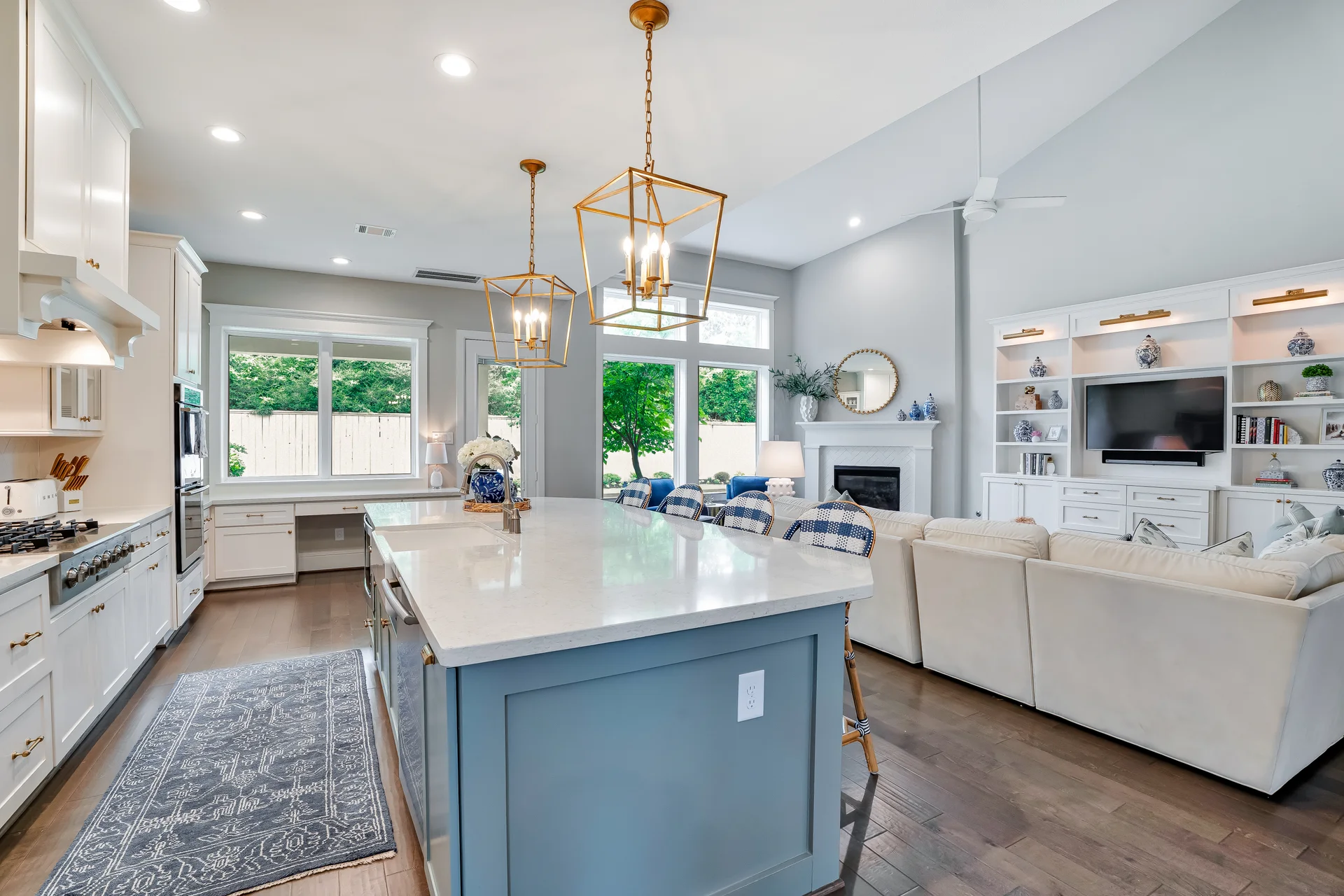
Professionals solve this by blending several bracketed exposures, or by adding flash to lift the room until it balances the light through the glass, so the Texas sky reads blue through the window while the room reads warm and inviting. They correct the color casts that make one corner look orange and another blue under mixed bulbs and daylight. They shoot each room from the corner that reads largest and truest without tipping into the fisheye distortion that makes buyers feel misled the moment they walk in. That judgment, applied room by room, is what separates a snapshot from a photograph that sells, and it is captured in a single well-run shoot rather than a frustrating afternoon of retakes.
5. Professional photos sell for more money
Faster is only half the return. The same presentation that draws more eyes also supports a stronger number. Beyond the Redfin dollar figures above, NAR's own guidance to agents is blunt: better property photos correlate with higher sale prices, because quality imagery widens the buyer pool and more competition holds the price up.
Presentation is part of that equation. The Real Estate Staging Association reports that staged homes spend up to 73% less time on the market than non-staged listings, and photography is where staging either pays off or disappears. Buyers add furniture in their imagination easily, but they cannot mentally subtract clutter. For a vacant listing, virtual staging furnishes empty rooms convincingly and helps a buyer picture the life inside the walls, provided it is clearly disclosed as digitally furnished. On a higher-priced home, imagery that signals a home worth its ask is often the difference between one offer and a bidding situation.
6. Great imagery is what gets your listing shared
A listing does not stay where you post it. Buyers text the link to a spouse, a parent, a friend who knows the neighborhood, and the homes that get forwarded are the ones that look worth forwarding. Weak photos die on the portal; strong photos travel, and every share is free reach into exactly the audience most likely to buy.
That is also where your own marketing compounds. NAR's Technology Survey found that 39% of REALTORS say social media delivers their highest-quality leads, more than any other technology. But a social feed is unforgiving of mediocre imagery in a way an MLS grid is not. A cohesive marketing kit, with stills sized for Instagram and Facebook, a short vertical video, and branded flyers, turns one shoot into a week of content that markets both the property and you. Amateur photos give you nothing to post that builds your brand rather than quietly dents it.
7. Professionals bring the media buyers now expect
Stills alone are no longer a complete listing. Today's buyers expect to explore a home before they ever set foot in it, and a competitive listing gives them the full toolkit. NAR reports that 52% of agents now use drone imagery, and Google and NAR's research found that roughly 70% of home shoppers use video to tour a home's interior.
A professional shoot can deliver all of it in one visit: aerial photography that shows the lot, the setback, and the surrounding neighborhood; a Matterport 3D tour that lets a buyer walk the home at midnight from another state; and video that gives the property motion and a sense of story. Pair it with a floor plan, which Zillow found makes 81% of buyers more likely to tour because it answers the one question photos cannot: how the rooms connect. One important note on the drone: flying commercially requires an FAA Part 107 certificate, so this is a piece of the shoot that genuinely has to be handled by a licensed operator, not a hobbyist with a quadcopter.
8. Honest editing protects you as much as it sells the home
The technology that makes listings look better has also created a new way to get an agent in trouble, and this is the area that has changed most. There is a bright line between finishing a photo and faking one. Correcting light, color, and verticals, or removing a stray trash can, is ordinary craft. Erasing a neighbor's roofline, deleting power lines, digitally widening a lot, or using AI to drop in a fireplace or a view that does not exist crosses into misrepresentation, and regulators have caught up.
NAR now expects materially altered listing images to be disclosed, and California's Assembly Bill 723, in effect since January 1, 2026, requires agents to clearly disclose digitally altered photos, retain the original unaltered image, and mark the altered version conspicuously, with real penalties attached. That is the direction of travel nationwide, and Texas agents should treat it as settled: enhancement is fine, alteration must be disclosed, and inventing features is never acceptable no matter how it is labeled. A professional who does this for a living knows exactly where that line sits and keeps your listing on the right side of it, which is one more part of the job you should not want to improvise.
The real return: your time and your reputation
Underneath all eight reasons is a ninth that agents feel most: this is not your job, and doing it yourself is expensive in the way that does not show up on an invoice. The hours spent wrestling with exposures and reshooting a dim kitchen are hours not spent with clients, writing offers, or prospecting the next listing. Worse, a mediocre gallery attaches to your name in every future seller's mind when they scroll your past listings before signing.
Professional listing photography buys back that time and puts a consistent, magazine-grade standard on everything you bring to market. It is the cheapest lever you have on speed and price, and the one buyers judge first. See how we shoot Texas real estate, and the standard we hold across every market we cover.